



Wrist Wraps
Wrist wraps are a simple training accessory that can noticeably change how your wrists feel under load. Your wrists support the bar during presses, bear body weight in push-ups and handstands, and work during pulling movements and ball sports. A wrap fits firmly around the wrist joint and helps keep the hand in a straighter, more natural position when the load increases. This category includes wrist wraps and wrist supports for strength training, CrossFit, gymnastics and court or team sports: elastic and stiff options with hook-and-loop fastening, thumb loops and different lengths.
2 products


Who needs wrist wraps and when?
Wrist wraps are used by people whose wrists work under significant load: gym athletes, powerlifters, CrossFit athletes, gymnasts, volleyball players, tennis players and basketball players. In strength training, wrist wraps are most commonly used for bench presses, overhead presses, dips and support-based exercises where the wrist tends to bend backwards. In ball sports, a wrap can make the hand feel more stable during frequent rapid movements.
Types of wrist supports
Wrist supports differ in purpose, and understanding the difference helps when choosing the right product.
- Supportive wraps - limit excessive wrist extension and help keep the wrist aligned with the forearm. Strength-training wrist wraps belong to this group.
- Compression supports - fit closely around the wrist while allowing most movement. They can often be worn throughout a workout.
- Warming supports - usually made from neoprene. They help retain warmth around the joint and are often used during warm-ups or in cooler gyms.
- General sports supports - elastic wrist supports and wristbands for team sports and functional training.
- Rehabilitation and post-operative supports - orthopaedic products, often with rigid stays. These should be selected on medical advice and are not intended for ordinary training.
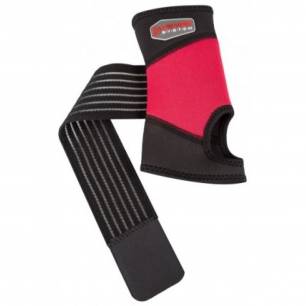
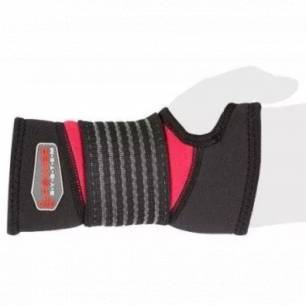
They also come in different designs: a long wrap wound around the wrist, an elastic cuff or an extended fingerless glove-style support.
How to choose wrist wraps
- Length. Shorter wraps are quicker to put on and interfere less with grip. Longer wraps allow more turns and provide firmer support.
- Stiffness. Stiffer wraps suit heavy compound pressing movements, while softer wraps work better for varied exercises where more wrist mobility is needed.
- Fastening. A wide, strong hook-and-loop fastening keeps the wrap more secure under load and is less likely to open during a set.
- Width. If you have narrow wrists, an excessively wide wrap may make wrist movement uncomfortable.
Frequently asked questions
Should wrist wraps be worn throughout the entire workout?
No. Supportive wraps are generally used for heavier sets and exercises that place substantial load on the wrists. During warm-ups and lighter sets, training without wraps can help maintain wrist strength and mobility. Compression and warming supports can usually be worn for longer periods.
What is the difference between a sports wrist wrap and an orthosis?
A sports wrist wrap is designed to support the wrist during training. An orthosis is intended to immobilise or stabilise the joint after injury or for medical conditions such as carpal tunnel syndrome and should be selected with medical guidance. If the wrist is painful, swollen or the pain does not go away, seek medical advice: a sports support does not replace diagnosis or treatment.
For instructions on how to wrap and care for wrist wraps, see the SportFit Help Centre. Other wraps and supports for training can be found in the Wraps and Supports category.