



Vitamin D
Vitamin D3 (cholecalciferol) is a fat-soluble vitamin that contributes to normal calcium absorption, the maintenance of normal bones and teeth, normal muscle function and the normal function of the immune system. The range includes vitamin D supplements in capsules, tablets, drops and chewable forms in different strengths, including products for children. Before buying, check the amount of vitamin D in the daily serving - it may be stated in micrograms or IU.
37 products



























Why is vitamin D particularly important in autumn and winter?
The main source of vitamin D for humans is not food but the skin, where vitamin D is produced in response to ultraviolet light. In Estonia and other Baltic countries, the sun is generally too low from around October to March for the skin to produce much vitamin D. Food provides relatively small amounts, mainly from oily fish, egg yolk and fortified foods. This is why vitamin D supplements are commonly used in northern countries, especially during the darker months.
What is vitamin D needed for?
Several health claims are authorised for vitamin D in the EU. Vitamin D contributes to:
- normal absorption and utilisation of calcium and phosphorus;
- normal blood calcium levels;
- the maintenance of normal bones and teeth and normal muscle function;
- the normal function of the immune system.
Vitamin D is also needed for normal growth and development of bone in children.
What do IU, µg and NRV mean on the label?
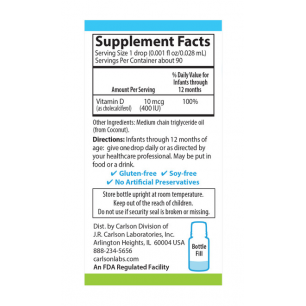
Vitamin D amounts are stated in two units: micrograms (µg) and international units (IU). The conversion is simple: 1 µg = 40 IU. This means 25 µg equals 1000 IU, 50 µg equals 2000 IU and 100 µg equals 4000 IU.
NRV stands for Nutrient Reference Value and is used for food labelling in the EU. The NRV for vitamin D is 5 µg or 200 IU. A product providing 2000 IU therefore shows 1000% NRV on the label. This does not mean that the amount is ten times higher than the safe limit: NRV is a reference value for comparing products, not a maximum intake level.
The safety limit is the tolerable upper intake level. EFSA has established an upper level for adults of 100 µg or 4000 IU per day from all sources. The limit for children is lower and depends on age.
Vitamin D3 or D2
Vitamin D3 (cholecalciferol) is the form most commonly used in supplements and is the same form produced in the skin. Vitamin D2 (ergocalciferol) is less common and is mainly used in plant-derived products. D3 can be animal-derived, usually from lanolin, or vegan, for example from lichen. If the source matters to you, check the product packaging.
Capsules, tablets or drops
- Softgels - vitamin D is already dissolved in oil, and dietary fat supports its absorption.
- Tablets - a compact format that is convenient for regular long-term use.
- Drops and sprays - suitable for children and people who prefer not to swallow tablets. The amount is easy to measure.
- Combination products - vitamin D is often combined with vitamin K2, calcium or omega-3. For more about combining D3 and K2, see the “Vitamin K2” category.
Frequently asked questions
Which vitamin D dose should I choose - 1000, 2000 or 4000 IU?
This depends on your vitamin D status, diet and the time of year. The most reliable approach is to have a 25(OH)D blood test and discuss the result with a doctor. Without testing, follow the manufacturer's recommendation and do not exceed 4000 IU or 100 µg per day from all supplements combined.
How should vitamin D be taken?
Take it with a meal containing some fat, as vitamin D is fat-soluble and is absorbed better this way. The time of day is less important than taking it regularly.
Can children take vitamin D?
Yes. Products specifically designed for children are available, most commonly as drops, with age-specific amounts. The dose should be discussed with a paediatrician, especially for infants.
Who should consult a doctor before taking vitamin D?
People with kidney disease, kidney stones, elevated blood calcium levels or sarcoidosis, as well as those taking diuretics or other medicines that affect calcium metabolism. Unsupervised high doses of vitamin D can lead to excessive calcium levels in the blood.
Other vitamins can be found in the Vitamins A-Z category.