



Manganese
Manganese is a trace mineral available as a food supplement, including in chelated form. Do not confuse it with potassium permanganate, an antiseptic used externally. Delivery to Estonia, Latvia, Lithuania, Finland and other EU countries.
View Left Column
1 product
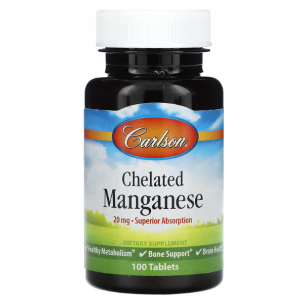
Manganese: what is it and how is it different from potassium permanganate?
Manganese is a trace mineral that the body obtains from food. In this category, it is available as a food supplement, including in chelated form (bound to an amino acid). Do not confuse manganese with potassium permanganate, sometimes known by the Russian colloquial name "margantsovka". Potassium permanganate is an antiseptic intended for external use and must not be swallowed.
| Manganese (food supplement) | Potassium permanganate | |
|---|---|---|
| What is it? | A trace mineral in capsule or tablet form | A chemical substance used as an antiseptic |
| How is it used? | Orally as a dietary supplement, following the instructions on the packaging | Externally only, as a diluted solution |
| Can it be taken orally? | Yes, at the dosage stated on the packaging | No, it can cause burns to the mucous membranes |
| Where is it sold? | Food supplement shops | Pharmacies as an antiseptic |
At a glance
- Manganese supplements and potassium permanganate are different substances and must not be used interchangeably.
- Manganese contributes to the normal formation of connective tissue, the maintenance of normal bones, normal energy-yielding metabolism and the protection of cells from oxidative stress.
- Excessive manganese intake may adversely affect the nervous system. Do not exceed the dosage stated on the packaging.
- Many supplement complexes (multivitamins and joint support formulas) already contain manganese. Check their ingredients to avoid obtaining it from several sources at once.
Why does the body need manganese?
Manganese is a component of enzymes involved in metabolism. The following health claims are authorised for manganese in the EU: manganese contributes to the normal formation of connective tissue, the maintenance of normal bones, normal energy-yielding metabolism and the protection of cells from oxidative stress. It is a trace mineral used in food supplements, not a medicinal product.
Chelated manganese
This category includes chelated manganese, a form in which the mineral is bound to an amino acid (such as glycine). Chelated forms differ in chemical composition from simple salts (sulphate and gluconate). When choosing a supplement, compare the amount of manganese per serving rather than focusing only on its form, and do not exceed the manufacturer's recommended dosage.
Manganese in the diet
Manganese is found in nuts, whole grains and cereals, legumes, leafy green vegetables and certain types of fish. With a varied diet, a significant proportion of manganese requirements is usually met through food.
Manganese and other minerals
Manganese is often included in multi-ingredient formulas alongside other minerals. If you are looking for mineral supplements, explore our Zinc, Calcium and Magnesium categories, as well as our main Minerals category.
Who should take extra care?
- People with liver conditions: the body eliminates excess manganese through bile, so the use of manganese supplements should be discussed with a doctor.
- If you take medicines regularly, are pregnant or breastfeeding, consult a healthcare professional before taking manganese supplements.
- If you already take multivitamins or joint support formulas, check how much manganese they contain.
How to choose a manganese supplement
- Compare the amount of manganese per serving, not just per package or tablet.
- Check the form (chelate or salt) and the list of additional ingredients.
- Make sure your other supplements do not already contain manganese.
- Follow the manufacturer's recommended serving size.
Frequently asked questions about manganese
Are manganese and potassium permanganate the same thing?
No. Manganese is a trace mineral sold as a food supplement. Potassium permanganate, sometimes known as "margantsovka", is an antiseptic intended for external use. Potassium permanganate solution must not be swallowed, as it can cause burns to the mucous membranes.
Why does the body need manganese?
Manganese contributes to the normal formation of connective tissue, the maintenance of normal bones, normal energy-yielding metabolism and the protection of cells from oxidative stress. It is a trace mineral, not a medicinal product.
Does manganese help support joints?
Manganese contributes to the formation of connective tissue and the maintenance of normal bones, which is why it is often included in formulas designed for joint and ligament support. It is not a treatment and does not replace medical advice for joint pain.
How much manganese can you take per day?
The amount depends on the specific product and is stated on its packaging. Do not exceed the recommended serving size: prolonged excessive manganese intake may adversely affect the nervous system. If you take other supplements, check whether they also contain manganese.
Which foods are rich in manganese?
Manganese is found in nuts, whole grains and cereals, legumes, leafy green vegetables and certain types of fish. With a varied diet, a significant proportion of manganese requirements is usually met through food.
This information is provided for general guidance and does not replace medical advice, particularly for people with liver conditions, during pregnancy or when taking medicines regularly.